7 min read
What 2,000 BitSave investors did when Bitcoin fell 50%
Bitcoin fell ~50% from its October 2025 high, yet BitSave's ~2,000 investors held: AUM held its band, SIPs kept running, biggest buys hit the worst days. The reason is design: withdrawals never froze, assets stayed verifiable on-chain, and every investor had a human relationship manager.

How BitSave behaved during the fall
At a glance, here is how BitSave held up through the drawdown versus a trading exchange:
The drawdown and the question
By October 2025, Bitcoin had climbed to an all-time high near $125,000. From that height it had a long way to fall through 2026, and it did. The market had rallied hard after the US election in late 2024, with Bitcoin crossing milestone after milestone; then the mood turned. Tariff talks, geopolitical tension between Iran and the United States and growing macro uncertainty pushed volatility across every risk asset, and crypto came down with it. At the same time, capital kept rotating into AI, pulling liquidity out of almost everything else. Even gold, the textbook safe haven, corrected sharply after its own surge. When one trade absorbs the flows, no asset class is spared.
On the chart below, Bitcoin falls from an all-time high near $125,000 in October 2025 to roughly $60,000 by February 2026, — about a 50% drawdown — recovers to $82,000 by May, then gives up most of it back to close to $62,000 in June.

What’s normally expected to happen to investors next? Panic – sell at the bottom, preserve oneself from further loss. So here’s the question this piece answers with our own numbers, from BitSave’s investors — when the Bitcoin price fell drastically, what did BitSave investors actually do?
What did BitSave investors actually do?
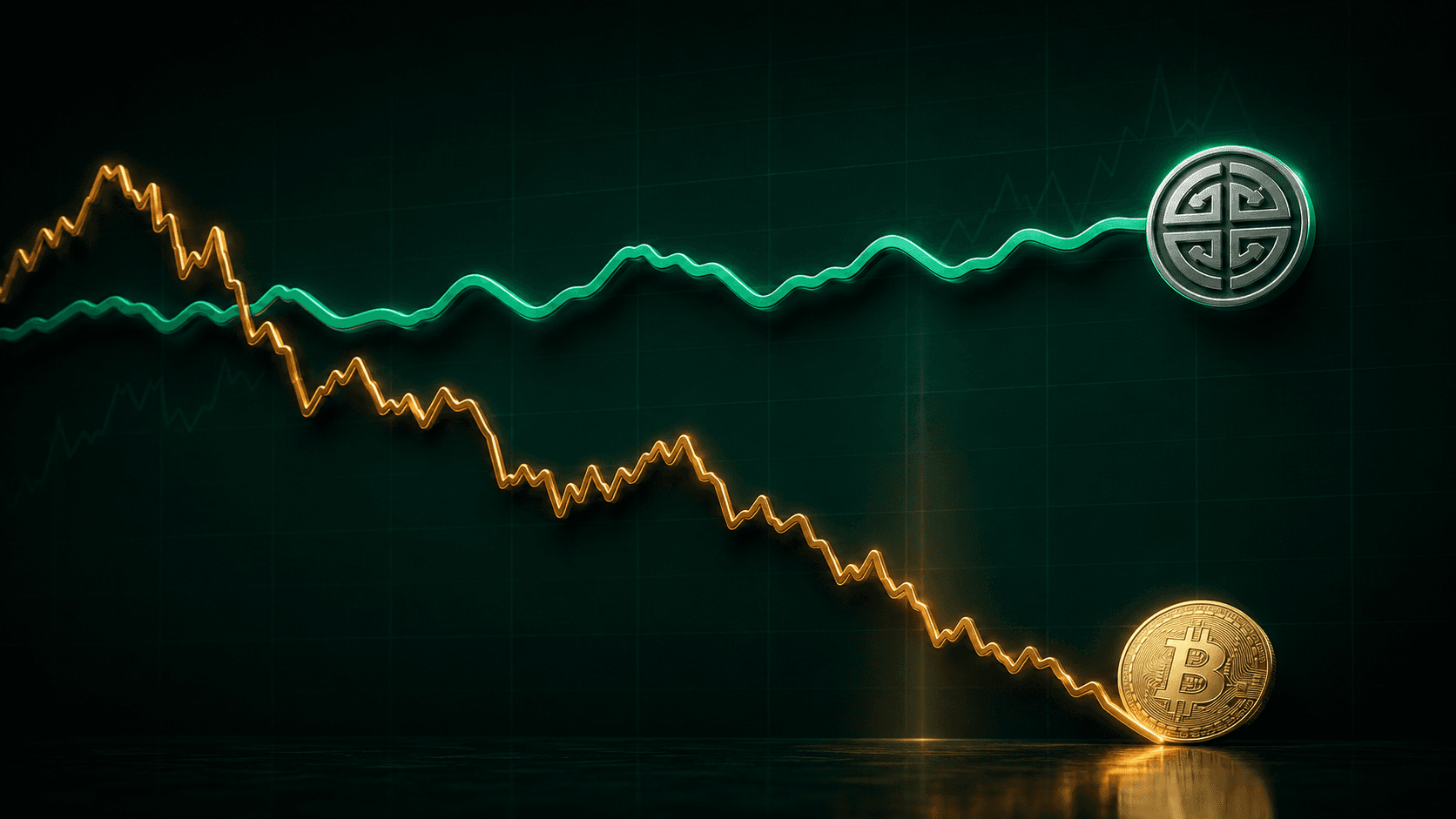
They mostly did nothing. In a drawdown, not doing anything to your investment portfolio is the hardest but can be amongst the best things to do. Set the two charts side by side and the story tells itself: Bitcoin falls by 50%, while BitSave’s AUM barely fluctuates.

AUM held steady. While the price swung far harder, BitSave’s assets under management (AUM) stayed inside a narrow range of roughly $1mn to $1.35 mn. AUM tracked the price but did not collapse from people pulling their money out.
- Most SIPs kept running. The majority of recurring investments continued straight through the fall. Nobody had to decide to be brave each month; the SIP just kept buying.
- The biggest buys landed on the worst days. The largest single buy orders in the window arrived on the steepest down days, while the SIPs buying low, remained as usual .
This is what “buy the dip” looks like when it’s a system and not just a trend or hack: the discipline is built in, so the investor doesn’t have to summon it at the exact moment it’s hardest.
The platform did not change the rules mid-fall
Here’s the part that matters most when markets are ugly: nothing about how BitSave worked changed while Bitcoin was falling.
- Withdrawals were never frozen.
- No products were disabled.
- NAV and cut-offs ran on their normal schedule.
If you wanted to exit, you could leave. That’s worth stating, because the single biggest fear in a crash is being trapped. Watching your asset value fall while a platform quietly switches off the exit is not unheard of. At BitSave the exit stayed open the whole time. Most people simply chose not to use it.
Why did investors stay calm? Your assets are visible on-chain.
There’s a deeper reason why investors stayed calm when Bitcoin fell, and it has nothing to do with optimism.
When FTX collapsed, customers could see their balances in the app while the underlying assets had already been spent elsewhere. The number on the screen was real. The asset behind it was not.
BitSave is built the other way around. Every unit is backed by assets held in institutional cold storage, and BitSave publishes a live Proof of Reserves & Liabilities screen anyone can open. For example, on 17 June 2026 the BitSave Crypto Index showed total assets of $356,117 against total liabilities of $356,117 — every unit issued, backed one to one.

And you don't have to take the screen's word for it. Take the Bitcoin allocation. The app reports 1.95 BTC, held across two named wallets — Wallet 1 (91.22%) and Wallet 2 (8.78%), each with a "View on Blockchain" link. Open them on a public blockchain explorer and the holdings are right there:

- Wallet 1: 1.77637690 BTC
- Wallet 2: 0.170883511 BTC
- Total: 1.94726 BTC — shown in the app as 1.95 BTC.
The number in the app and the number on-chain are the same number. Through the entire drawdown those holdings stayed in the same wallets and never moved. You could verify them yourself, on any red day you wanted to.
By keeping your holdings verifiable at all times, BitSave makes sure the only thing you ever have to deal with is the market's movement, never a doubt about whether your investments are still there.
A relationship manager to reach out to on red days
The last piece isn’t technology. It’s the human relationship manager available for every investor, big or small, who attends to your queries, fears, or doubts.
Through the fall, every investor had a relationship manager reachable on WhatsApp — a real person, answering on the days that felt the worst. And the job on those days was not to sell. It was the opposite.
The approach the team holds to is investor-first, and it shows most in a downturn. When investors got nervous, the response was to explain what was happening and help them tide through it — not to push more capital in. Beyond routine SIP reminders, nobody was nudged to “buy the dip” with money they hadn’t planned to spend. The point was to keep people calm and informed, and let them make decisions inside their own comfort level.
Part of that calm was set long before the drawdown, by filtering out the wrong investor before they ever invested. As the team puts it, this is built for the long run. Code coupled with human compassion is what kept the AUM steady when the Bitcoin price didn’t.
What this does not prove
One drawdown is not a forecast.
The AUM held; that doesn’t mean every single investor did. Some exited because they could, and the exit was open. And no one tried to forcefully keep them invested by saying Bitcoin always recovers. What this event shows is narrower: when the price fell hard, the platform’s design made staying calm the easy choice, and most investors stayed put.
FAQs
What did BitSave investors do when Bitcoin fell ~50% from the October’25 high?
Most investors held their investments. The majority kept their SIPs running through the fall, the largest buy orders landed on the worst price days, and AUM held within a band while the price swung much harder.
Did BitSave freeze withdrawals during the drawdown?
No. Withdrawals were never frozen, no products were disabled, and NAV and cut-offs ran on their normal schedule throughout.
Why did BitSave’s AUM hold while the price fell?
Because the change in AUM came mostly from price, not from people withdrawing. Most investors stayed and kept investing, so the book held within a band and recovered.
Is BitSave built for preservation or growth?
It’s built for disciplined, long-term exposure — SIP-based investing into a rules-based crypto index product, with assets in cold storage you can verify on-chain. The aim is to help long-term holders stay invested through volatility, not to trade it.
Does seeing assets on-chain actually help in a crash?
Yes — it removes the FTX-style doubt. Because the assets stay in the same on-chain wallets, you can verify your holdings are still there on any day, which makes a falling price easier to sit through.
Does this past behaviour predict future returns?
No. One drawdown is not a forecast, and crypto does not “always recover.” This describes how investors behaved in one specific window, not what prices will do next.