8 min read
Why BitSave issues unit tokens, not coins
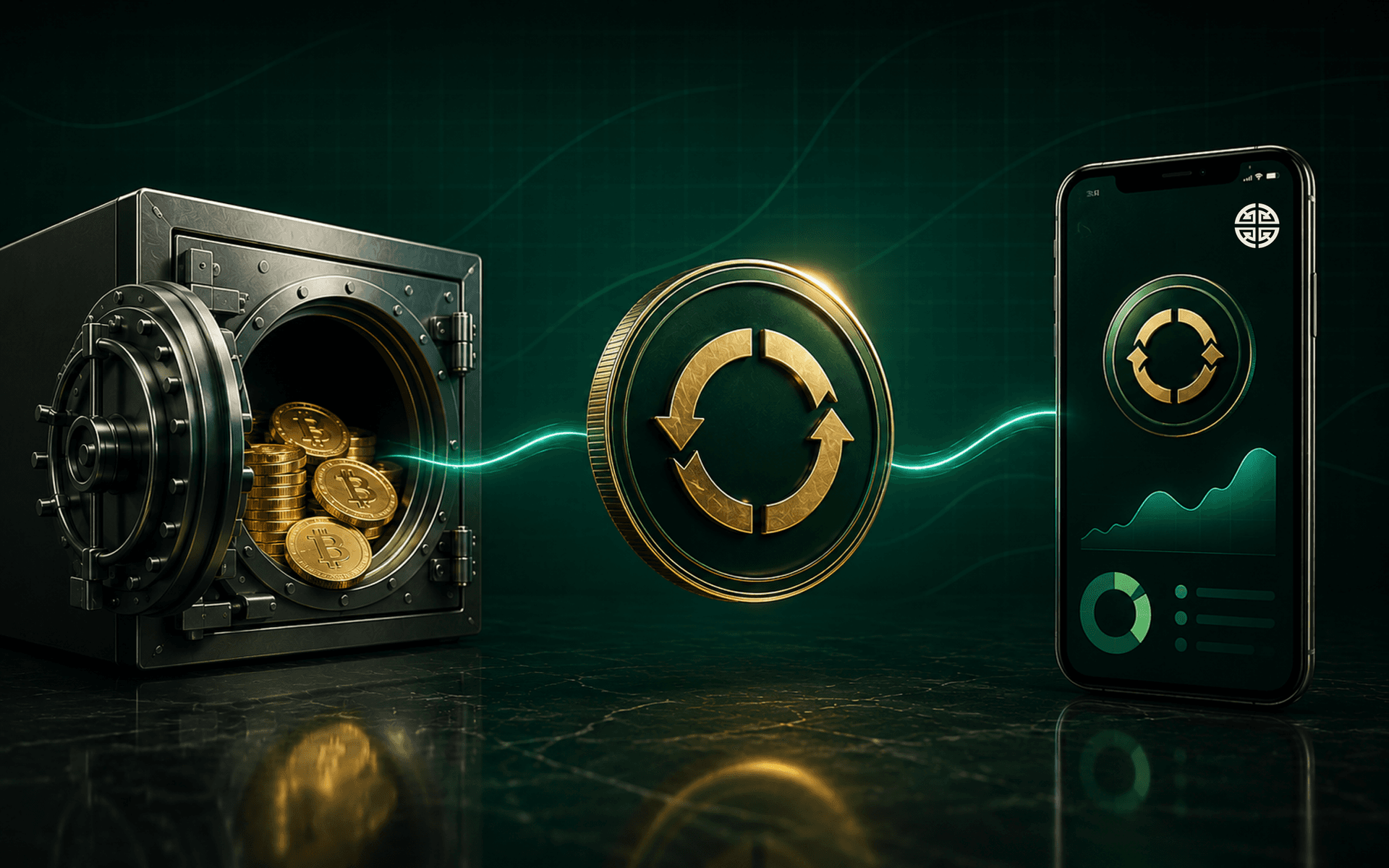
With crypto investments, one lost key can wipe out your portfolio for good. BitSave removes that risk: it holds the coins in institutional cold storage and issues you unit tokens that records your ownership, with the key split between you and a custodian. Audited, insured, off the balance sheet.

In this article we cover:
- Three ways an Indian investor can hold Bitcoin
- Why a unit token is built for a long-term holder rather than a trader
- Two real cases of investors who lost coins holding their own keys
- What actually keeps the asset safe
- What happens if you lose your phone or the platform shuts down.
- How a financial planner can offer crypto exposure without handling private keys.
The three ways to hold Bitcoin, side by side
There are three ways an Indian investor can hold Bitcoin today. Which one fits depends on whether you want to trade crypto or hold it for the long term.
The rest of this piece explains the right-hand column.
What's the safest way to get Bitcoin and Ethereum exposure in India without worrying about custody and hacks?
For most risk-conscious investors it is to hold the asset through a platform that uses institutional cold storage, rather than figuring out self-custody on a hardware wallet or leaving funds on a trading exchange. That removes the two failure points behind most retail losses and hacks: a single lost key, and a platform that holds your coins on its own balance sheet.
This matters most for the person putting 2 to 5% of their wealth into crypto for the long term, who wants exposure without checking a price every day. Self-custody asks that person to become their own security team. An exchange asks them to trust a trading platform with an asset they mean to hold for years. A unit token is the third option.
Why a unit, and not the coin itself?
BitSave issues a unit rather than handing you the coin for three plain reasons.
First, it is a format Indians already understand.
When you invest in an index fund or a mutual fund, you do not receive the underlying shares. You hold units that record your share. A unit token works the same way. It is a familiar structure, not a workaround.
Second, a unit survives a lost phone.
A raw coin or private key, once lost or stolen, is gone with no way back. A unit can be frozen and reissued to a new device, the same way a bank blocks a lost card and sends a replacement. Your balance does not change. Only your access does.
Third, a unit is not exposed the way crypto coins are.
Coins in a hot wallet on a phone have been found to be drained over something as ordinary as public Wi-Fi. A unit token is assigned against an asset held in cold wallets and hence cannot be stolen away.
Is this really safer than an exchange, or is it just marketing?
It is a fair question, don’t "trust us”, trust the proof underneath it. Four things sit behind a BitSave unit, and each is verifiable.
- An independent audit. BitSave has completed the cybersecurity audit mandated by FIU-IND under the 15 September 2025 circular, conducted by Grant Thornton Bharat, with all 26 assessed domains marked compliant.

- Insurance on the assets. Lloyd's of London cover is placed directly on the cold-storage assets by our institutional custodians.
- Proof of reserves you can verify. The assets are not held on BitSave's balance sheet i.e. not on BitSave’s balance sheet and shown in disclosed wallets, so that you can check the holdings on a public blockchain rather than trusting a number in an app.


- Wallet 1: 1.77637690 BTC
- Wallet 2: 0.170883511 BTC
- Total: 1.94726 BTC — shown in the app as 1.95 BTC.
- No lending, no staking. BitSave does not lend or stake customer assets to earn a yield. Your coin is not working somewhere you cannot see.
A hardware wallet is safe in the right hands. The point is not that it is unsafe. It is that it puts the entire job of security on one person, and for a long-term holder who simply wants exposure, that is a high bar. The proof above is what a platform can offer instead.
What actually happens when a hardware wallet fails?
Two real cases make the point better than any argument. Both investors held their own keys. Neither got their money back.
In the first, an investor downloaded what looked like the official Ledger app from the App Store as an update. It was a fake. He entered his seed phrase, the master key to the wallet, and the attacker drained 5.9 BTC. The device was never hacked. He handed over the key without knowing it.
In the second, an investor kept his holdings in a hot wallet on his phone and connected to public airport Wi-Fi. Before he reached his gate, the wallet was drained. No fake app, no seed phrase typed by hand. A hot wallet stays connected to the internet, which is the surface an attacker needs.
Ownership is the point, not where the coins sit
It helps to be precise about what a unit protects. Like most platforms, BitSave holds customer Bitcoin in shared, pooled wallets as well. That is normal, but it is not the thing that matters. What matters is who owns what is inside.
On an exchange, the coins are the platform's asset. You hold a claim against it, effectively an IOU (I Owe You), and you are depending on the exchange doing the right thing every hour of every day, indefinitely. That is fine for trading but a wrong decision for a long-term or generational asset. Indian investors saw this play out when a large exchange ran into trouble and account-holders learned the Bitcoin was owned by the platform, not by them.
BitSave is structured the other way around. Your unit token records your ownership of the Bitcoin held for you, kept off the platform's balance sheet with an institutional custodian. The wallet may be shared. Your share stays yours.
What happens to your Bitcoin if the platform shuts down?
The underlying Bitcoin is held in institutional cold storage, off BitSave's balance sheet, protecting you against any chances of bankruptcy. That means it is not part of what creditors could claim if the platform failed. The custodian still holds a key to your holdings, and your unit token still records your ownership. This is the opposite of an exchange, where the coin in your account is the platform's own asset.
Can you recover your holdings if you lose your phone or key?
Yes, and this is the sharpest contrast with a hardware wallet. You never hold a raw private key, and you are not holding the coins directly. You hold a unit token, and the key to the underlying Bitcoin is split between you and an institutional custodian. Losing your device or your login does not lose the asset. Your access is restored and reissued to a new device, the same way a bank blocks a lost card and sends a replacement. The balance stays the same. Only the access changes.
If someone reached your unlocked phone, a unit still cannot be transferred to a stranger's wallet the way loose crypto can. The most they could do is sell your units, and the proceeds would settle back to your registered account.
How can a financial planner offer crypto exposure without handling private keys?
A financial planner can offer clients crypto exposure through BitSave without ever touching a private key. Custody sits with the institutional custodian, and the client holds units, so the planner never has to store or secure keys for anyone. Onboarded partners also get a dashboard to track client progress one place, the way a mutual fund distributor manages a client book. The planner advises; BitSave handles the custody. There is more on this in our guide for advisors.
To sum it all up:
- The safest route for most long-term holders is institutional cold storage, not a single hardware key or a coin left on an exchange.
- A unit token is a familiar structure: like an index or mutual fund, you hold units that record your share, not the underlying coins.
- The safety claim rests on proof, not adjectives: a Grant Thornton audit, Lloyd's cover on the assets, reserves verifiable on-chain, and no lending or staking of users assets.
- Ownership, not pooling, is the distinction. On an exchange you are an unsecured creditor; on BitSave your unit records your share, held off the balance sheet.
- Lose your phone and you keep the asset. If the platform shuts down, the coin sits off its books and stays yours.
FAQs
Is BitSave really safer than holding coins on an exchange, or is that just marketing?
The difference is verifiable, not marketing. BitSave has completed the FIU-mandated cybersecurity audit by Grant Thornton with all 26 domains compliant, institutional custodians carry Lloyd's cover directly on the cold-storage assets, shows reserves you can verify on-chain, and does not lend or stake customer assets. On an exchange the coin is the platform's balance-sheet asset and you hold a claim against it.
What is a unit token?
A unit token is a record of ownership over an asset held in custody for you. It works like an index fund: you hold units that record your share, not the underlying holdings. With BitSave your Bitcoin sits in institutional cold storage and you hold unit tokens issued against it, so that you get the exposure without guarding a private key yourself.
Can I withdraw the actual Bitcoin from BitSave?
BitSave issues unit tokens that represents ownership of the underlying Bitcoin held in institutional cold storage, the same grade of custody the likes of BlackRock and Morgan Stanley use for their Bitcoin ETFs. That custody is not built for moving individual coins in and out. You own the exposure and can sell your units; the asset itself stays in the system that keeps it safe.
What happens to my investment if BitSave shuts down?
The underlying Bitcoin is held off BitSave's balance sheet and is bankruptcy remote, so it is not part of what creditors could claim if the platform failed. The custodian still holds a key to your holdings, and your unit token still records your ownership.
What if I lose my phone?
You do not lose the asset. A unit cannot be transferred to a stranger's wallet, so the worst someone could do with an unlocked phone and wallet is sell your units, with the proceeds settling back to your registered account. If the phone is lost, your access is restored and reissued to a new device, the way a bank blocks and replaces a lost card.
Is a hardware wallet safer than BitSave?
A hardware wallet is safe in the right hands, but it makes one private key your entire security model. Lose it, forget it, or enter your seed phrase into a fake app, and the asset is gone with no recovery. Documented cases include an investor who lost 5.9 BTC to a fake Ledger app and another investing connecting his hot wallet to a public Wifi. With BitSave, your asset’s custody remains with an institutional custodian, so a single mistake does not lose the asset.
Can a financial planner use BitSave for clients?
Yes. A planner can offer clients crypto exposure without handling private keys, because custody sits with the institutional custodian and clients hold units. Onboarded partners get a dashboard to track client investments, and SIPs in one place.